


Al-Ghazali on Disciplining the Soul and Breaking the Two Desires by Imam Al-Ghazali – book summary cover
Book summary Β· Spirituality

Al-Ghazali on Disciplining the Soul and Breaking the Two Desires summary

Imam Al-Ghazali

  • 20 chapters
  • 1 h 6 min audio
  • Audio & text

Al-Ghazali’s classic guide to good character: how the soul’s habits are formed, how to diagnose its hidden illnesses, and how to tame the two great desires of the stomach and the flesh through balance rather than extremes.

Download Islam Central on the App StoreGet Islam Central on Google Play

Preview a chapter below, then listen to the full summary in the Islam Central app.

Key ideas in Al-Ghazali on Disciplining the Soul and Breaking the Two Desires

1. Character Can Change

Good character is a firmly rooted state of the soul, and like a seed it grows through practice. Act with generosity, humility and patience until those acts become your second nature.

2. Heal the Heart with Its Opposite

Al-Ghazali treats the soul like a physician, curing pride with humility and greed with giving, and offers four mirrors to see your own faults: a wise teacher, a sincere friend, your critics and the people around you.

3. Balance, Not Destruction

Anger and desire are not to be killed but tamed. Moderate eating, a guarded gaze and lawful marriage keep the two great desires of the stomach and the flesh in their proper place.

Chapter 1 of 20 Β· Free preview

The Foundation of Every Building

🎧 Listen to this chapter (3 min)

Every building rests on a foundation. And al-Ghazali tells us that the foundation of our faith is good character.

Allah praised His Prophet, peace be upon him, saying that he stood upon a tremendous character. When A’ishah was asked about his character, she said simply: his character was the Qur’an.

A man once came to the Prophet and asked, "What is religion?" He answered, "Good character." The man came from his right side and asked again. "Good character." From his left side. "Good character." Then from behind him. And the Prophet said, "Have you not understood? It is that you do not become angry."

Think about that. Not a long list of rituals. Not a debate. A heart that does not explode at the people around it.

Another report tells of a woman who fasted all day and prayed all night, yet she hurt her neighbours with her tongue. And the Prophet said there was no good in her. Her worship could not cover the wounds she caused.

The Prophet would pray, "O Allah, You have made my outer form beautiful, so make my character beautiful too." He taught that he was sent to perfect noble character, and that nothing weighs heavier on the scale than good character.

The early scholars understood this deeply. One of them said, "A person of bad character is like a broken piece of pottery. It cannot be mended, and it cannot be returned to clay." Another said, "Bad character spoils many good deeds, and good character makes many faults small."

So before we speak about hunger, desire and struggle, al-Ghazali wants us to know where we are going. The goal of all this discipline is not a harsh, proud, exhausted soul. The goal is a beautiful character. A heart that is gentle with people, because it is at peace with Allah.

Ask yourself today: would the people closest to me describe my character as my best act of worship?


What is Al-Ghazali on Disciplining the Soul and Breaking the Two Desires about?

Al-Ghazali’s classic guide to good character: how the soul’s habits are formed, how to diagnose its hidden illnesses, and how to tame the two great desires of the stomach and the flesh through balance rather than extremes.

Who should read Al-Ghazali on Disciplining the Soul and Breaking the Two Desires?

About the author: Imam Al-Ghazali

Abu Hamid al-Ghazali (d. 1111 CE), known as the ‘Proof of Islam’ (Hujjat al-Islam), was a Persian jurist, theologian and mystic who taught at the Nizamiyya college in Baghdad. After a deep spiritual crisis he left his post to follow the inner path, and wrote the Revival of the Religious Sciences (Ihya’ ‘Ulum al-Din), one of the most widely read works in Islamic history, uniting law, theology and spirituality.

See all 14 summaries by Imam Abu Hamid al-Ghazali

About this summary. This is an Islam Central summary and analysis, written as an educational guide to the key insights of the book. The narration often adopts the author’s perspective and voice. It is not the original book or audiobook, and we encourage you to read the full work. Find the original book.

Book summaries like Al-Ghazali on Disciplining the Soul and Breaking the Two Desires

More Spirituality summariesAll book summaries

Al-Ghazali on Disciplining the Soul and Breaking the Two Desires FAQs

What are the main ideas of Al-Ghazali on Disciplining the Soul and Breaking the Two Desires?

The key ideas are: Character Can Change; Heal the Heart with Its Opposite; Balance, Not Destruction. Good character is a firmly rooted state of the soul, and like a seed it grows through practice.

Who wrote Al-Ghazali on Disciplining the Soul and Breaking the Two Desires?

Al-Ghazali on Disciplining the Soul and Breaking the Two Desires was written by Imam Al-Ghazali.

How long is the Al-Ghazali on Disciplining the Soul and Breaking the Two Desires summary?

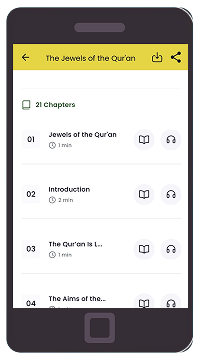
The Islam Central summary has 20 chapters and about 1 h 6 min of audio, with the full text to read along in the app.

Can I read or listen to Al-Ghazali on Disciplining the Soul and Breaking the Two Desires for free?

You can read and listen to chapter 1 on this page. The full summary is available in the Islam Central app on iPhone and Android.

Is this the original book?

No. This is an Islam Central summary and analysis, written as an educational guide to the book’s key ideas. The narration often adopts the author’s voice to make it more immersive, but it does not replace the original work.

Listen to Al-Ghazali on Disciplining the Soul and Breaking the Two Desires in the Islam Central app

Key insights from essential Islamic books, in audio and text.

Download Islam Central on the App StoreGet Islam Central on Google Play