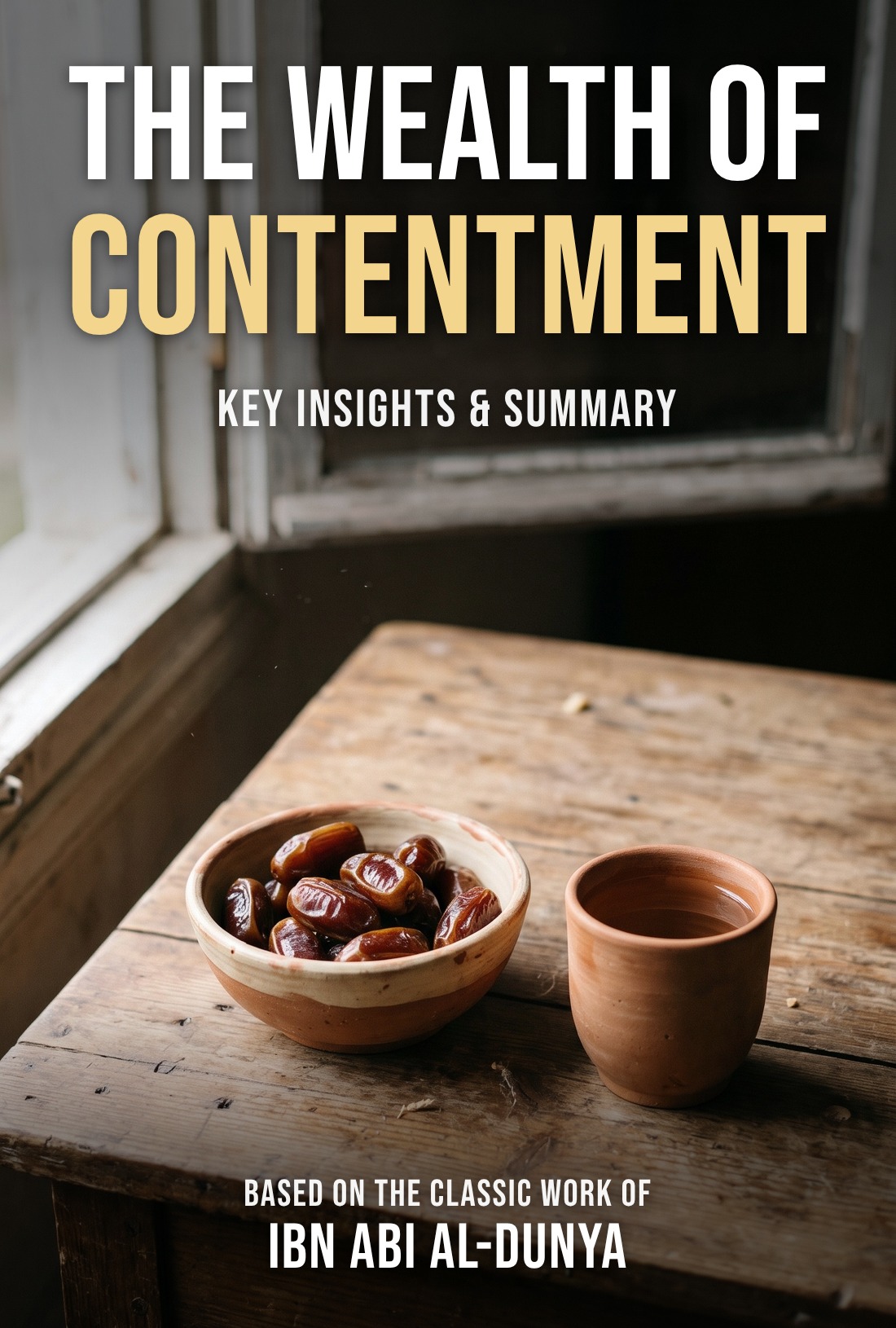
The Wealth of Contentment by Ibn Abi al-Dunya – book summary cover
Book summary · Islamic Practice & Guidance

The Wealth of Contentment (Al-Qanaah wa al-Taaffuf) summary

Ibn Abi al-Dunya

Based on Al-Qanaah wa al-Taaffuf (Contentment and Self-Restraint)

  • 13 chapters
  • 29 min audio
  • Audio & text

Ibn Abi al-Dunya on contentment: keeping one's dignity by not asking people, turning every need to Allah, trusting that provision is written, and the true richness of a contented soul.

Download Islam Central on the App StoreGet Islam Central on Google Play

Preview a chapter below, then listen to the full summary in the Islam Central app.

Key ideas in The Wealth of Contentment

1. The Whip That Fell

The companions pledged never to ask people for anything, not even to pass them a fallen whip.

2. The Man Who Turned Back

Ibn Jabir felt ashamed to seek provision from anyone but Allah, turned back, and was given double what he would have received.

3. Riches of the Soul

Richness is not having many possessions; real richness is richness of the soul.

Chapter 1 of 13 · Free preview

The Whip That Fell

🎧 Listen to this chapter (2 min)

Welcome. This is a short book about a quiet kind of strength. The strength not to need people.

Some eleven hundred years ago, Ibn Abi al-Dunya of Baghdad gathered what the Prophet ﷺ and the early Muslims said about contentment, and about keeping one's dignity by not asking others.

He begins with a promise. The Prophet ﷺ once asked his companions, who will guarantee me one thing, and I will guarantee him Paradise? Thawban said, I will. Do not ask people for anything, said the Prophet ﷺ.

And Thawban never did. If his whip fell from his hand while he was riding, he would not ask anyone to pass it to him. He would get down from his mount, and pick it up himself.

Another group of companions made a pledge with the Prophet ﷺ. To worship Allah alone, to pray the five prayers, and then he added, quietly, and not to ask people for anything. One of them later said, I saw some of those men drop their whips, and not ask anyone to hand it back.

It sounds like a small thing. But it is a whole way of living. A heart that turns to Allah first, and to people last.

What is The Wealth of Contentment about?

Ibn Abi al-Dunya on contentment: keeping one's dignity by not asking people, turning every need to Allah, trusting that provision is written, and the true richness of a contented soul. This summary draws on Al-Qanaah wa al-Taaffuf (Contentment and Self-Restraint) by Ibn Abi al-Dunya.

Who should read The Wealth of Contentment?

About the author: Ibn Abi al-Dunya

Abu Bakr Ibn Abi al-Dunya (d. 894 CE) was a Baghdad scholar and tutor to Abbasid princes, author of more than a hundred short books gathering hadith and the sayings of the early Muslims on character and spirituality.

See all 29 summaries by Ibn Abi al-Dunya

About this summary. This is an Islam Central summary and analysis, written as an educational guide to the key insights of the book. The narration often adopts the author’s perspective and voice. It is not the original book or audiobook, and we encourage you to read the full work. Find the original book.

Book summaries like The Wealth of Contentment

More Islamic Practice & Guidance summariesAll book summaries

The Wealth of Contentment FAQs

What are the main ideas of The Wealth of Contentment?

The key ideas are: The Whip That Fell; The Man Who Turned Back; Riches of the Soul. The companions pledged never to ask people for anything, not even to pass them a fallen whip.

Who wrote The Wealth of Contentment?

The summary is based on Al-Qanaah wa al-Taaffuf (Contentment and Self-Restraint), by Ibn Abi al-Dunya.

How long is the The Wealth of Contentment summary?

The Islam Central summary has 13 chapters and about 29 min of audio, with the full text to read along in the app.

Can I read or listen to The Wealth of Contentment for free?

You can read and listen to chapter 1 on this page. The full summary is available in the Islam Central app on iPhone and Android.

Is this the original book?

No. This is an Islam Central summary and analysis, written as an educational guide to the book's key ideas. The narration often adopts the author's voice to make it more immersive, but it does not replace the original work.

Listen to The Wealth of Contentment in the Islam Central app

Key insights from essential Islamic books, in audio and text.

Download Islam Central on the App StoreGet Islam Central on Google Play