



A Book for Both Worlds
🎧 Listen to this chapter (3 min)
Welcome. What does it mean to live well?
For some, living well means success in this world. Money, position, comfort. For others, it means turning away from the world entirely, to focus only on the next. But a great scholar of Baghdad, nearly a thousand years ago, believed the answer lay in holding both together.
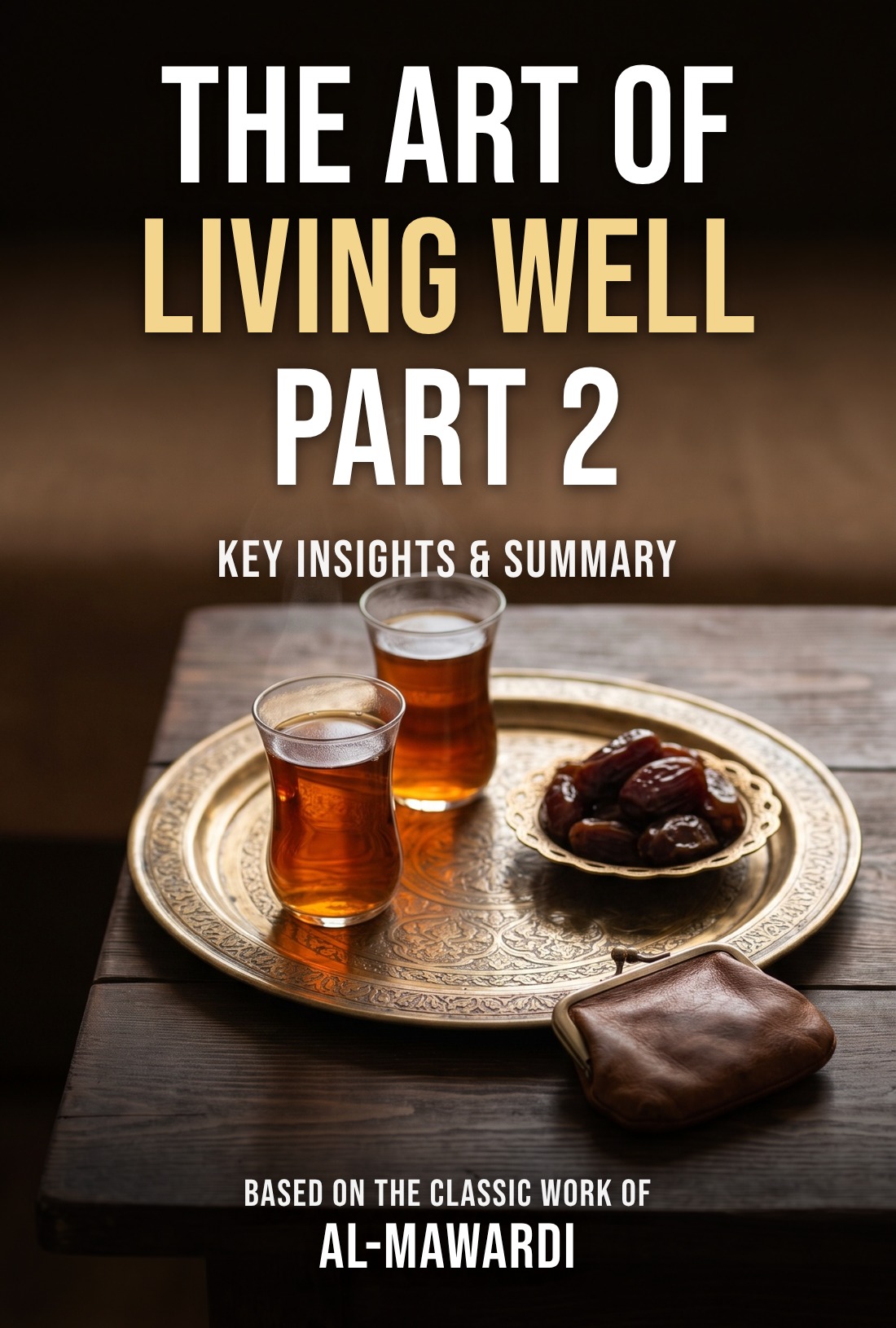
His name was al-Mawardi. He was a chief judge, a jurist, an adviser to caliphs. And he wrote a book with a simple title: The Conduct of Worldly Life and Religion.
He explains why. The value of anything we pursue, he says, depends on its fruits. And nothing bears greater fruit than what puts both our religion and our worldly life in order. When religion is upright, worship is sound. When worldly life is in order, happiness is complete.
He promised to write in a balanced way, neither too brief nor too long, combining the precision of the jurists with the gentleness of the men of letters. He would quote the Qur'an, the Sunnah, the sayings of the wise, and the lines of poets. Because, he says, hearts enjoy variety, and grow bored of a single tune.
He quotes Ali, the cousin of the Prophet ﷺ: Hearts grow weary, just as bodies grow weary. So bring them rare gems of wisdom.
The book has five chapters. The merit of reason and the danger of desire. The conduct of knowledge. The conduct of religion. The conduct of worldly life. And the conduct of the self.
In this first part, we walk through the first three. The mind that guides us, the knowledge that lights our way, and the faith that gives it all meaning. Together, they are the foundation of a life well lived.
.jpg)
.jpg)
.jpg)


