


A Judge Who Knew Hardship
🎧 Listen to this chapter (3 min)
A little over a thousand years ago, in the marshes of southern Iraq, a group of frightened men met each Friday in a small mosque. They had fled their homes. A powerful vizier wanted them ruined, or dead. They sat together, shared their troubles, and longed for relief.
One of them was a judge, al-Muhassin al-Tanukhi. He had served as a judge in many towns, and had sat in the councils of great rulers like Adud al-Dawlah. But his life was full of sudden falls. He was dismissed, hunted, imprisoned, and threatened with death. His lands were taken, and some never came back.
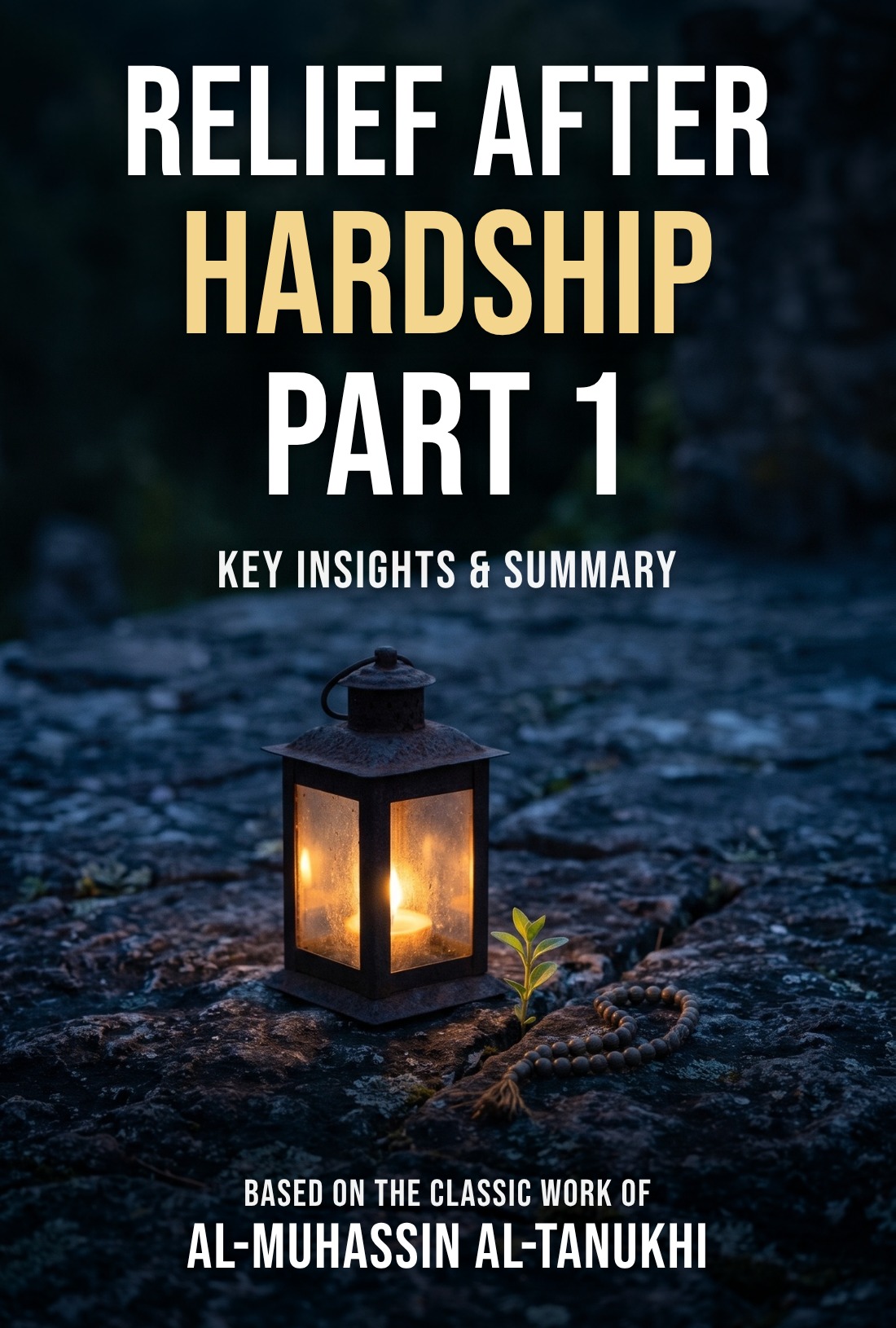
Out of these trials he wrote a famous book: Relief After Hardship. It is a collection of verses, reports, prayers, and true stories, all with one message. However dark the night, Allah brings the morning.
He tells us why he wrote it. When a person is crushed by sorrow, he said, reading how others were rescued strengthens his hope. It reminds him that the One who saved them can save him too. And it teaches him to turn to his Lord, not to despair.
al-Tanukhi speaks from experience. Once, in that marsh of al-Batihah, where he had taken refuge with its ruler Imran ibn Shahin, a merchant told the frightened men a saying. If hardship entered a hole, two eases would come and pull it out. al-Tanukhi at once made a little verse of it. Then, he says, not four months had passed before Allah relieved him, and many of the men in that mosque, and returned them to their homes.
At another time he was in prison, in great danger. He kept repeating the prayer of the prophet Yunus in the belly of the whale. On the ninth day, he says, Allah set him free.
In this first part of his book, we hear what the Qur'an says about relief, the prayers that the Prophet ﷺ taught for times of distress, and the stories of people who called on Allah in their darkest hour and were answered.

.jpg)